William Saw
This author account hasn't been claimed yet. To claim this account, please contact the outlet owner to request access.
Writing For
 MonsterVine
 Latest Reviews
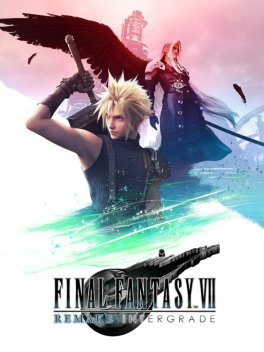
It’s hard to believe Final Fantasy VII Remake came out nearly six years ago, bringing the first part of the trilogy project to life. Since then, we’ve reviewed Remake, Intermission, and Rebirth, but it was about time for a refresher.

Visually, Atelier Firis is stunning with a mix of animated and in-game cutscenes to flesh out the dialogue and story. The cutscenes are voiced but speaking to townspeople occurs in speech bubbles and text reads. The music isn’t very memorable thus far, but this could change as the story progresses and different encounters occur.
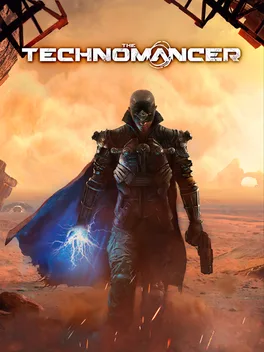
The combat in The Technomancer plays in a tactical fashion, punishing players for relying too heavily on attacks and instead encouraging a nuanced approach that caters to the situation at hand. Three combat styles (Warrior, Rogue, and Guardian) are available for use during battle. The Warrior stance offers effective crowd control against groups of enemies, Rogue brings agile hits and the use of a gun, while the Guardian is a defensive minded play style designed for a heavy handed approach. Layering all of this are Technomancer powers, which are all upgradable in their respective skill trees. Stealth is also an option for those looking to pick off enemies one by one through sneak attacks and well placed traps. The difficulty curve hits hard in the beginning hours and eases up as you become familiar with the various mechanics, like figuring out the lock-on button. It’s a bit overwhelming at first but the best approach is to experiment with everything at your disposal.
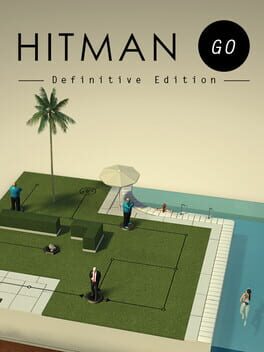
The developers award more savvy thought-out approaches with optional challenges, such as obtaining a briefcase within the level, achieving a no-kill, or “x” amount of steps but I was merely satisfied enough making it to the end. So here lies the dilemma. For a series that touts its creative freedom and player agency, having it relegated in the confines of a board game environment feels rather uncharacteristic despite all the window dressing. These restrictions play out when the player moves Agent 47 on a special node which auto-enables the action instead of having the choice to activate it, the absence of skippable turns, and the constraints the game ultimately shows when it narrows down to one determined way of completing a level. Hitman GO is a board game with set rules and parameters but I was hoping for more classic Hitman versatility and leeway in its approach.
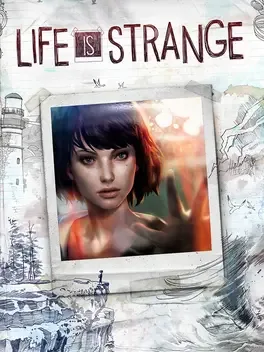
The music and washed aesthetic look also create a convincing setting, layering with the narrative in an effective manner. In the environment, there are several supernatural cues in the world of Arcadia Bay that made me do a double take, at times blurring the lines between the real and surreal. The harrowing image of birds smacking glass windows, or the sheer amount of eco-disaster left me with an eerie, haunting feeling. At times, the naturalist take of the idyllic days of yesteryear reinforce the teenage nostalgia but as the story develops, Life is Strange skillfully ventures into the creepier happenings of the world.

The driving segments are nicely matched with the set piece moments in Sleeping Dogs, enabling Wei Shen to hijack the pursuers’ car or ram a police vehicle off the road. Vehicle gunplay starts from tense slow-mo moments and ends in cars going out in a fiery blaze of glory. All the while, Sleeping Dogs keeps track of your actions during the missions and tallies up a score that in turn ranks you in a global leaderboard in the aptly named Social Hub to compensate as the multiplayer portion of the game. Aside from bragging rights, there’s not much else to do there.

Granted, Kinect controls have its hitches and that’s a noticeable detriment to the game when it necessitates accuracy. A lot of the mini games relegate themselves as repetitive toss fests and with no on-screen indicator besides your virtual hand; it’s hard to see where throws ultimately end up. I found it difficult to gauge a target or a direction when balls were flying out of my hand at the slightest movement. Voice commands and head tracking functionality seemingly work fine respectively.
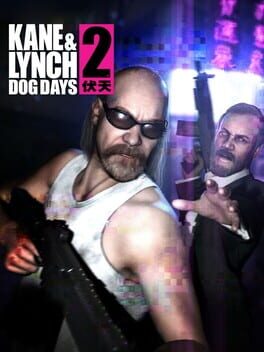
Although, Kane & Lynch 2 feels kind of uninspired on the gameplay front, the presentation itself shines through. It’s intentionally bad, like low compression quality YouTube videos bad. But it serves to portray a gritty documentary style perspective, not obtained if you turn off steady cam. The color separation, MPEG compression, pixel artifacting, and lighting bloom really stand out as a way to flesh out the narrative pieces, especially in-game cutscenes, and high intensity shooting action within the game.
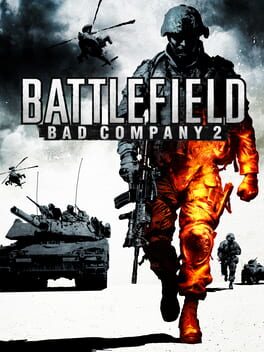
Battlefield: Bad Company attempts to come onto its own with a refreshingly funny, down to earth narrative to contrast the serious nature of other war based shooters. This is evidently seen in the subtle organic feel of the characters of Bad Company, tending towards a down-to-earth portrayal of soldiers. Players will again take the role of Preston Marlowe accompanied by the same ragtag crew of misfits that composed Bad Company. This time around, the story is more straightforward than the clouded morality and greed focused motivator of the last game. Interestingly enough, the events of the first game and its aftermath are never actually discussed in the sequel. Instead, the Bad Company is tasked with stopping an incredibly powerful super weapon from being activated by an evil Russian. The gist is pretty much in line with the Modern Warfare antics as of late, utilizing ludicrous scenarios as the last ditch resort to saving the good ol’ United States.
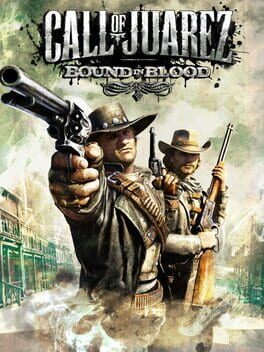
Bound in Blood has remarkable aesthetic detail at first glance but up close there are glaring technical problems. The design of the game is confounded by the decision to include open world encounters, as the majority of the game is quite linear. These open world situations reflect a vastly barren environment, and while visually stunning, offers little to interact with. The environments also hinder the gameplay when enemies become virtually impossible to spot as they are blended to the terrain, creating confusion as to where you’re being shot from. During cutscenes, the game suffers from screen tearing which is unacceptable when playing with a high definition television. The draw of Bound in Blood is seemingly the standoff feature called ‘Quick Draw.’ At the end of every chapter, you will be engaged in a duel at high noon and the goal is to be the faster man. This is the game’s representation of a boss fight which is essentially masked as a minigame of timing and reflexes. Often, this would lead to moments of frustration and frequent retries when unable to pull the trigger faster than the opponent.